
You want to make your home greener. Great. But then you open your browser, start reading, and within ten minutes you’re completely lost between heat pumps, mechanical ventilation systems, wall insulation, floor insulation, double glazing, triple glazing… It’s overwhelming. Honestly, I get it. Most people end up doing nothing because they don’t know where to begin – and that’s probably the worst outcome of all.
So let’s cut through the noise. If you’re serious about reducing your home’s environmental footprint, there’s a logical order to things. And once you understand that order, the whole thing becomes a lot less daunting.
Step one : stop the leaks before you do anything else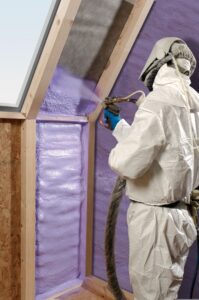
This sounds almost too basic, but insulation is – without question – where you need to start. Every other upgrade you make to your home (new boiler, solar panels, wood stove) will be significantly less effective if your house is leaking heat like a sieve. If you want to go deeper on the theory behind home energy efficiency, ecoloeco.fr covers a lot of the fundamentals really well.
Think about it this way. You wouldn’t fill a bath without putting the plug in first, right ? Same logic applies here.
In the UK, a poorly insulated home can lose around 25% of its heat through the roof, and another 35% through walls. That’s not a minor inefficiency – that’s more than half your heating bill quite literally disappearing into the air outside. And those numbers get worse in older properties. If you live in a Victorian terrace or a 1960s semi, chances are the original construction wasn’t designed with thermal performance in mind.
So, where to insulate first ?
Loft insulation is usually the easiest win. It’s relatively cheap, the installation is simple, and the savings are immediate. Current UK recommendations suggest at least 270mm of mineral wool in the loft – a lot of older properties have far less than that, or nothing at all.
Wall insulation depends on your wall type. Cavity walls (most homes built after the 1920s) can be filled with injected insulation – it’s done in a day and costs a fraction of what you’d imagine. Solid walls are trickier and more expensive, either internal or external insulation is needed, but the difference it makes is significant.
Floor insulation often gets ignored. But if you’ve got suspended timber floors, you might be losing 10–15% of your heat that way. Not nothing.
Don’t touch anything else until the fabric of your building is sorted. Seriously.
Ventilation : the part everyone forgets (and then regrets)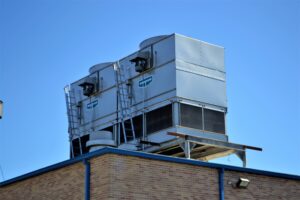
Here’s the thing nobody tells you when they talk about insulating your home : the tighter your house, the more you need to think about ventilation. These two things go hand in hand, and ignoring this balance is a genuine mistake.
An airtight, well-insulated home with no proper ventilation system is a recipe for condensation, damp, mould – and actually poor air quality. Which is bad for the building and bad for the people living in it.
The solution isn’t to leave gaps in your insulation. The solution is mechanical ventilation – specifically something called MVHR (Mechanical Ventilation with Heat Recovery). It’s a system that extracts stale air from bathrooms and kitchens, recovers the heat from that air, and uses it to pre-warm fresh incoming air. On paper it sounds complicated. In practice it’s remarkably efficient – good systems recover up to 90% of the heat that would otherwise be lost through ventilation.
Is it expensive ? Installation costs vary quite a bit depending on the size of your home and whether you’re retrofitting or building new – but in a well-insulated house it pays back over time. And it genuinely transforms the feel of living in an airtight home.
If MVHR isn’t on the cards yet, at minimum make sure you have decent extractor fans in wet rooms, and that trickle vents on windows are working properly. It’s not perfect, but it avoids the damp trap.
Now, the wood stove question
Okay, so your insulation is sorted, your ventilation is under control. Now you’re thinking about heating – and maybe a wood stove has caught your eye. Fair enough. They’re beautiful, they feel warm in a way that radiators just don’t, and yes, wood can be a genuinely lower-carbon fuel source compared to gas or oil when it’s managed well.
But – and this is important – a wood stove is not automatically eco-friendly. It depends heavily on what wood you’re burning and how you’re burning it.
Wet or unseasoned wood is the main culprit. When you burn wood with high moisture content (above 20%), you get incomplete combustion. That means more particulates, more smoke, more pollution – and less heat for your effort. It’s worse for the air quality in your neighbourhood and worse for your flue.
Dry, well-seasoned hardwood (oak, ash, beech) is the right choice. Or kiln-dried logs if you don’t have storage space to season your own. In the UK, the Ready to Burn certification is a decent indicator – it means moisture content is below 20%.
On the stove itself : if you’re buying new, look for Ecodesign Ready models. These meet much stricter emissions standards than older stoves, producing significantly less particulate matter. Some older stoves are genuinely quite dirty by comparison – it might sound harsh, but replacing a pre-2022 stove with an Ecodesign model can make a real environmental difference.
One more thing : the size of the stove matters. An oversized stove run at low output actually burns less efficiently and produces more emissions than a correctly sized stove running properly. Get a heat calculation done for the room – it’s often a free service from stove installers.
What about combining all three ?
The ideal setup – and I find this genuinely exciting when it all comes together – is a well-insulated, well-ventilated home with a correctly sized, efficient stove as a supplementary heat source. Not the primary system necessarily, but a beautiful, practical complement to whatever your main heating is.
In that scenario, your energy needs drop dramatically because the insulation does the heavy lifting. The ventilation keeps the air clean and the building healthy. And the stove provides warmth, comfort, and a lower-carbon top-up on the coldest days.
That combination can realistically cut your heating-related carbon emissions by 40–60% compared to a poorly insulated home running on gas. Those aren’t invented numbers – they’re consistent with what energy assessors and retrofit specialists report in practice.
The practical starting checklist
If you’re still not sure where to start, here’s a simple priority order :
1. Get an energy assessment done. In the UK, an EPC (Energy Performance Certificate) gives you a baseline. A more detailed retrofit assessment from a qualified assessor gives you a proper action plan tailored to your specific property.
2. Insulate the loft first. Cheapest, fastest, biggest return. Do it this year if you haven’t already.
3. Deal with the walls. Cavity fill if you have cavity walls. Solid wall insulation is a bigger project but worth planning for.
4. Think about ventilation at the same time. Don’t wait until after insulation to think about this – it needs to be part of the same conversation.
5. Then look at heating upgrades. Whether that’s a wood stove, a heat pump, or improving your existing system – once the fabric is right, you’ll need far less of whatever you choose.
The order matters. Skip steps and you’ll either waste money or create new problems.
One last thought
Maybe the most important thing I’d say is : don’t let perfect be the enemy of good. You don’t need to do a full Passivhaus retrofit overnight. Even one decent improvement – loft insulation, a new efficient stove, better ventilation in a damp bathroom – is worth doing.
Start somewhere. Start with what’s feasible this year. And then build on it.
Your home being genuinely eco-friendly isn’t a destination you arrive at. It’s a direction you move in. And that first step ? It’s usually simpler than you think.